Hungarian Agriculture on the Verge of a Paradigm Shift
Many smart agricultural experts began to debate…
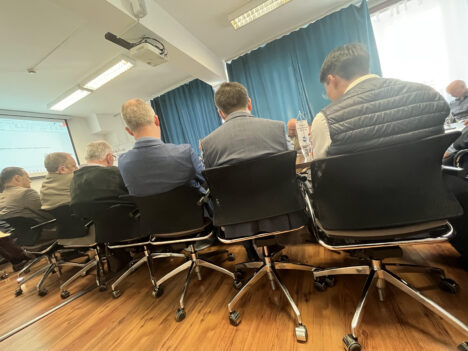
The Agricultural and Food Industry Section of the Hungarian Economic Association held a professional discussion on improving the competitiveness of Hungarian agriculture, restoring profitability, and adapting to climate change. The event centered on the study titled A Turning Point in the Agricultural Economy, prepared in collaboration with OTP and the Hungarian University of Agricultural and Life Sciences (MATE), which outlines the strategic directions that will shape the sector’s future.
The document identifies four fundamental goals: strengthening competitiveness, sustainable farming, knowledge-based production, and rural development. According to Csaba Gyuricza, rector of MATE, the current operating model is unsustainable, and therefore a comprehensive shift in mindset and concrete measures are needed.
Hungarian agriculture has fallen significantly behind in recent decades. While the value and profitability of agricultural production have increased internationally, in Hungary they have declined in real terms. Since the transition to a market economy, cattle and hog herds, as well as the production of several animal products, have decreased significantly. Rising input costs have further eroded the profitability of farming.
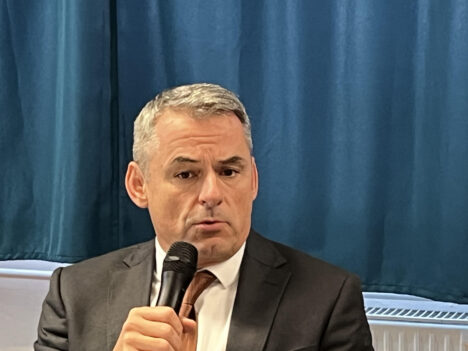
According to Gyuricza, the country cannot compete effectively with either countries engaged in low-cost, high-volume production or knowledge-intensive agricultural economies that generate high added value. To close the gap, it would be necessary, among other things, to develop the food processing sector, increase the share of domestic products, improve soil and water management, and strengthen climate adaptation.
The recommendations also include diversifying crop rotation, reviewing land use, and strengthening domestic seed production. The rector emphasized that crop production alone does not guarantee adequate income: production must be coordinated with processing and sales. To this end, government involvement, the development of agricultural education, and the provision of a skilled workforce are all equally important.

Péter Zoltán, the ministerial commissioner responsible for agricultural strategy, also called for fundamental changes. In his view, the focus should be placed not only on traditional competitiveness but also on the sector’s resilience. He considers it necessary to reform the subsidy system, emphasizing that subsidies must serve actual farming operations and efficiency. The government plans to take further strategic and legislative steps in the coming period.
Pál Goda, executive director of the Institute of Agricultural Economics, pointed out that a uniform development model cannot be applied to every agricultural sector. Individual product chains operate under different market and natural conditions; therefore, the strategy must also take consumer demands and expected climate change into account.
Developing knowledge-based agriculture requires a more highly skilled workforce and higher production value. In addition, it is essential to modernize the IT systems used by specialized government agencies and to improve the reliability of agricultural data. Digital and artificial intelligence-based solutions can only be effective if they are built on appropriate databases.
Participants in the expert discussion agreed that the future of agriculture does not depend solely on increasing production volumes. Sustainable development requires adaptive farming practices, a more efficient processing industry, up-to-date knowledge, and coordinated agricultural policy decisions.